The Dopamine Trap: How AI Made Me Work More, Not Less
The idea of AI was simple: AI was a bootstrap tool. It does the tedious 60% of the boilerplate - the setup, the basic scripting, repetitive tasks - leaving me to do the last 40% of the polish and review. The promise was that this would make me vastly more efficient and, in doing so, allow me to work less. I imagined being able to do all of my tasks, leaving me to think more strategically and enjoy more free time.
I was completely wrong.
While I absolutely agree that AI makes you more efficient, it hasn’t given me any time back. Don’t me wrong, it has drastically increased my output. I finally get the AI bandwagon and why people are raving about it - taking a raw idea from proof of concept in a matter of hours, not weeks, is mind-blowing.
But it does come with an unexpected side effect.
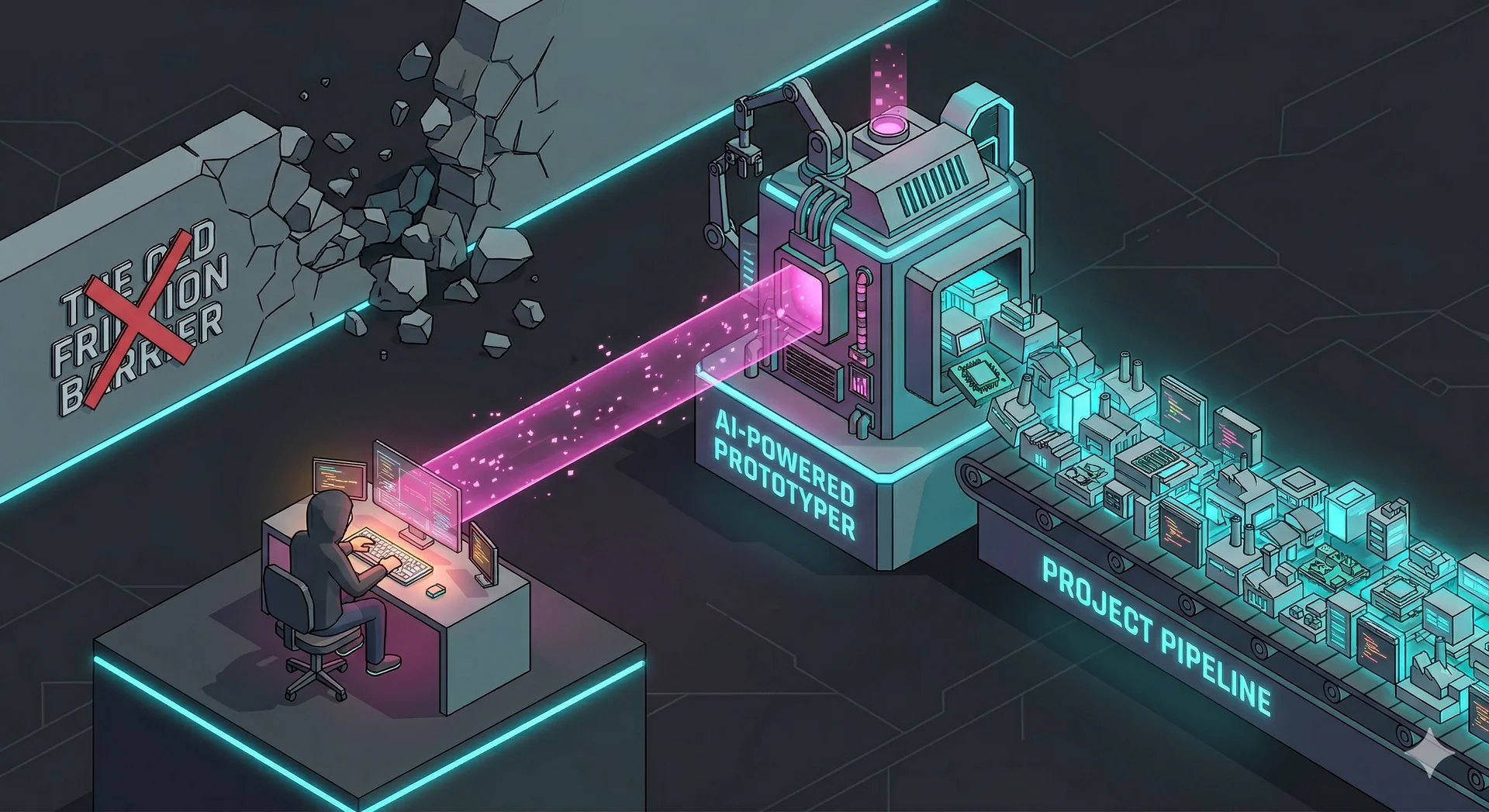
The Death of “Good Friction”
To understand the side effects, we have to look at how we used to work.
Before AI, if I had a random thought or idea for a new script or tool at 9PM on a Tuesday, I would immediately think about how I would tackle it. I’d have to spin up a repo, write a bunch of boilerplate, configure some scripts, and fight with some obscure dependency issues. That effort was a barrier - it was enough for me to put it into the back of my mind to look into it later. It was friction.
As it turns out, that friction was actually a good thing. It acted as a natural boundary. I would simply decide it was too much effort right now and go to sleep. Friction protected my personal time.
Today, that friction is totally gone.
If I have an idea at 9PM, I can jump onto the laptop, quickly craft a prompt to an AI, and have a working prototype by 10PM. Because the barrier is almost zero, every single stray thought suddenly becomes an actionable project.
The Dopamine Loop
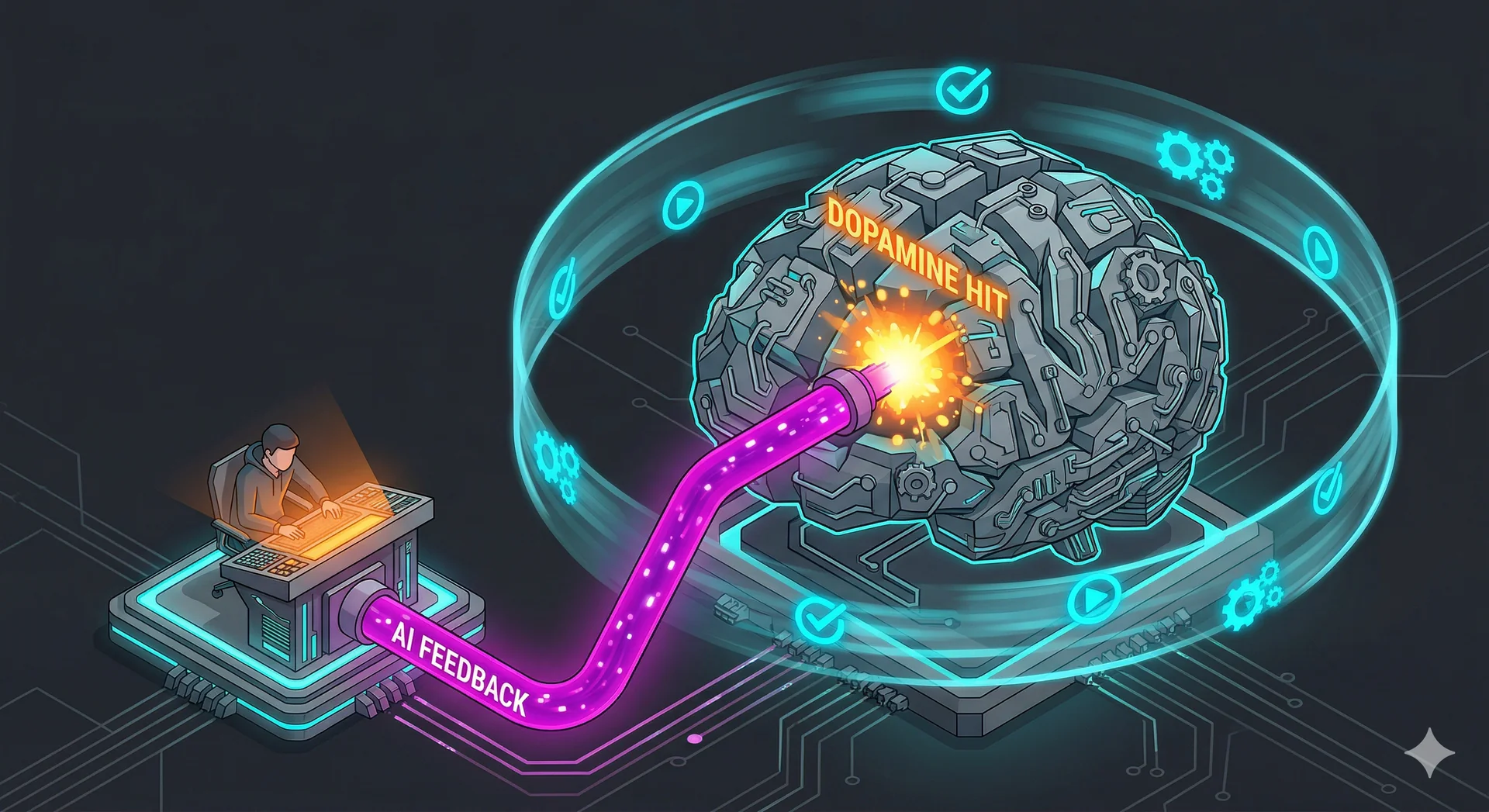
As engineers, our brains are wired to solve puzzles. Seeing a complex problem resolved, seeing the code do its thing, and watching the system run is deeply satisfying.
Historically, that satisfaction was delayed by days or weeks of grinding. AI compresses that timeline into minutes.
You have a complex thought, you feed it into the model, you iterate and debug it together for 20 minutes, and boom - it works. That instant feedback loop provides a massive dopamine hit. It is incredibly compelling. You aren’t just solving problems anymore - you are chasing the high of immediate gratification.
The Blurring of Boundaries
I have always thought about work outside of work. That part is not new. What is new is that I can now act on those thoughts immediately.
This is a whole new frontier of always being “on.” Early mornings, late evenings, weekends: the gap between “that’s an interesting idea” and “let me just quickly test this” has completely disappeared. Free time used to be the space where ideas sat, matured, and were pondered. Now, free time is where they get built.
AI did not create my curiosity. It just removed the natural guardrails that once contained it.
Reintroducing Friction
That means the answer is not to blame AI. The answer is to deliberately add some friction back.
My rule is simple - if I get an idea late at night or early in the morning, I write it down instead of opening the laptop. No “quick” prototypes. If it still looks important the next day, I can build it then.
It is a crude control, but that is the point.
We have spent years trying to remove friction from software delivery. AI has now removed so much of it that some of us need to start selectively adding it back to protect our attention and our time.
Does this rule work perfectly? No. I break it far more often than I would like to admit.
AI is a genuine force multiplier. It lets us move from idea to proof of concept at a speed that would have seemed ridiculous a few years ago. But it has not reduced the amount of work available to me. It has just reduced the friction that used to stop me from creating more of it.
That is why it feels like a superpower. But with great power comes great responsibility.

We have upgraded the engine. Now we need to install the brakes.